
You’ve already got the ticket decision made — you’re going up the Burj Khalifa. What you haven’t decided is when. That second question matters almost as much as the first.
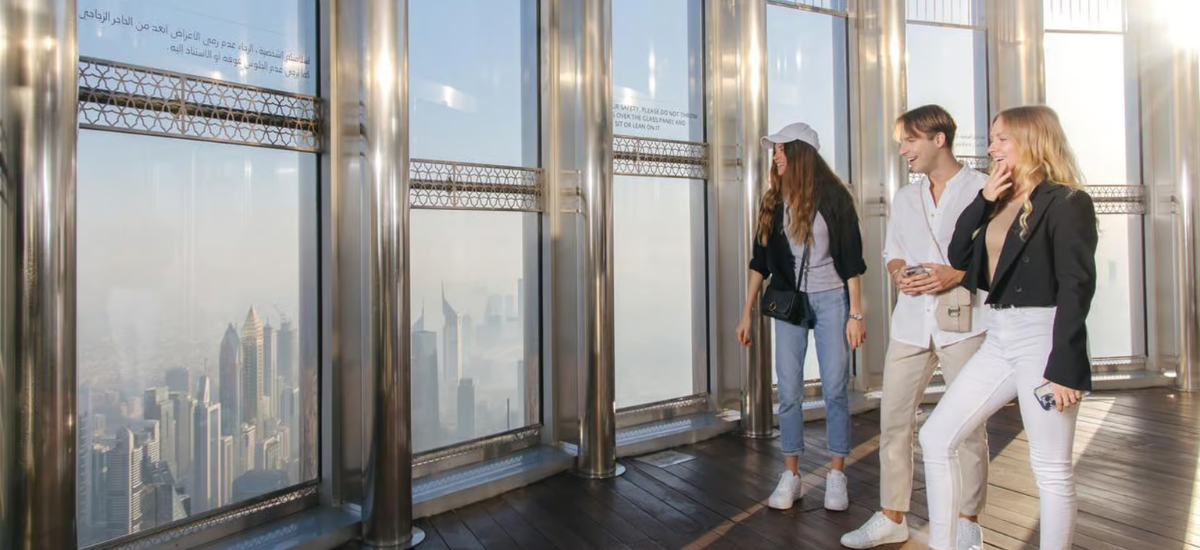
Here’s what nobody tells you until you’re standing in line: the observation deck doesn’t show you the same city twice. Go at 10 a.m. and you’ll see Dubai in crisp, sun-bleached detail — the Palm, the coastline, the desert fading into haze at the horizon. Go three hours after sunset and that same view becomes a carpet of lights along Sheikh Zayed Road. Same elevator, same floor, completely different experience.
So which one is “best”? That depends on what you’re actually going up there for. If you want photos, romance, family-friendly timing, or the cheapest ticket that still delivers a great view, the right hour changes. Let’s work through it.
Quick Answer — What Is the Best Time to Visit Burj Khalifa?
For most first-time visitors, sunset is the best overall time. You get daylight on the way up, watch the transition happen in real time, and end up with a lit-up skyline by the time you head back down — two experiences on one ticket.
Beyond that, “best” splits by priority:
- Best overall: Sunset — daylight, golden hour, and early night lights in one visit.
- Best for photography: Sunset for color and drama; daytime for sharp, haze-free shots of the coastline and desert.
- Best for fewer crowds: Weekday mornings, right when the deck opens.
- Best for budget travelers: Non-prime hours — generally mornings and later evening — which tend to be priced lower than the late-afternoon-into-sunset window.
- Best for nighttime views: A couple of hours after sunset, once the sky is fully dark.
None of these is wrong — they’re just optimized for different things, which is why Burj Khalifa sells separate time-slot tickets to begin with.
Best Season to Visit Burj Khalifa
Dubai doesn’t have a bad month for an indoor observation deck — you’re not standing outside sweating through the visit. But season still affects visibility and how many other tourists share the deck with you.
November through March is generally the sweet spot: cooler, less humid, and typically clearer air, with better odds of seeing all the way to the coastline. It’s also peak tourist season citywide, so you trade better weather for busier attractions.
April, May, and October sit in between — warmer, but usually a bit quieter than peak winter.
June through September is hot and humid, and haze tends to be more common, softening long-distance visibility. The upside: it’s low season, so tickets and hotels are often more available, and the deck itself is climate-controlled regardless of what’s happening outside.
One honest caveat: no one can promise a perfectly clear day at any time of year. Dust and haze don’t follow a strict calendar — winter gives you better odds, not a guarantee.
Best Day of the Week to Visit Burj Khalifa
Dubai’s weekend falls on Saturday and Sunday, which may surprise US travelers. Those days, plus Friday evenings, draw more local families in addition to tourists, especially around sunset and the Dubai Fountain shows below.
Weekdays — Tuesday through Thursday mornings especially — are typically the calmer window for the deck itself. Timed entry keeps even busy days from feeling chaotic, but since ticket demand and pricing shift with the calendar, it’s worth comparing current ticket options for your actual travel dates rather than assuming last year’s pattern holds.
Best Time of Day to Visit Burj Khalifa
Morning
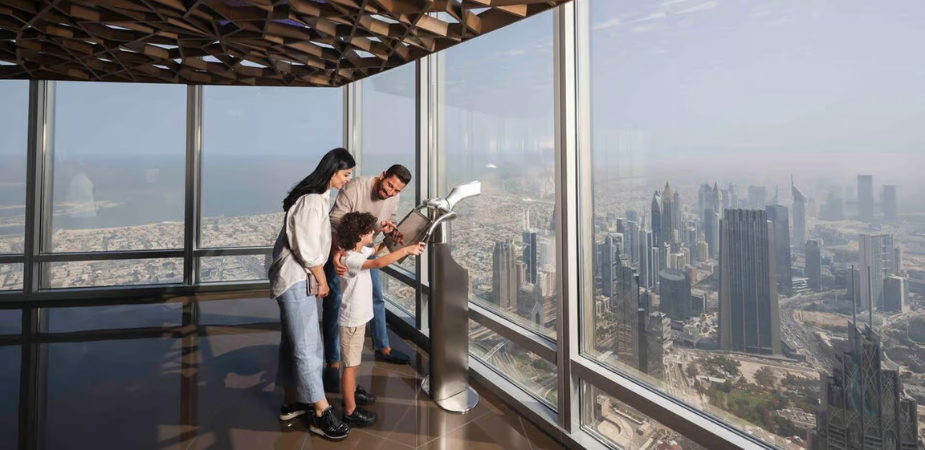
The brightest daylight views and the smallest crowds of the day — genuinely underrated for wide, well-lit photos of the coastline and desert. Check-in moves fastest too, since most travelers default to afternoon or sunset slots. The tradeoff: you miss the skyline-at-night payoff entirely.
Midday / Afternoon
Similar daylight clarity to morning, sometimes with more heat haze depending on the season. Crowds build as the afternoon pushes toward sunset. Works well if you want daylight views but can’t manage an early slot, or you’re pairing the visit with a Dubai Mall stop.
Sunset
The slot everyone asks about, for good reason. You go up while it’s still light, watch the sky shift through orange and pink, and by the time golden hour fades, the city’s lights are switching on beneath you — a bright skyline shot and a lit-up night shot without buying two tickets. It’s also the most popular window, which means the biggest crowds and, often, prime-hour pricing rather than standard entry.
Night
A visit a couple of hours after sunset gives you Dubai at its most cinematic — the grid fully lit, Fountain shows below, and a noticeably calmer deck than the sunset rush. A strong pick for couples wanting a quieter pace, or anyone who’s already seen daylight views elsewhere and just wants the night skyline. The downside: no daytime visibility at all, just city lights.
Burj Khalifa Sunset vs Daytime vs Night
| Time | View Quality | Photography | Crowds | Atmosphere | Relative Price | Best For |
|---|---|---|---|---|---|---|
| Morning | Excellent (clear, bright) | Very Good — sharp daylight shots | Usually quieter | Calm, low-key | Lower | Early risers, photographers, budget travelers |
| Midday/Afternoon | Very Good (some haze possible) | Good | Moderate, building toward sunset | Casual, steady flow | Lower to moderate | Flexible schedules, pairing with mall visit |
| Sunset | Excellent (daylight into night) | Excellent — most dynamic light | Usually busier, most popular | Lively, romantic | Higher — prime-time pricing may apply | Couples, photographers, first-timers |
| Night | Good (city lights only) | Very Good — skyline and light shots | Usually quieter than sunset | Calm, atmospheric | Moderate | Couples, repeat visitors, late-schedule travelers |
Pricing and exact time windows vary by date and season, so treat “relative price” as a general pattern. Compare current Burj Khalifa ticket options before locking in a slot.
What Time Should I Go to Burj Khalifa for Sunset?
There’s no single fixed answer — any article giving you one is guessing. Dubai’s sunset shifts roughly an hour and a half to two hours across the year, falling around 5:30–6 p.m. in winter and closer to 7–7:15 p.m. in summer.
Look up the actual sunset time for your travel date before booking, then work backward. Plan to be checked in at least 30–45 minutes before you want to be at the windows — security, scanning, and the elevator ride all eat into that window. Sunset tickets are typically sold as a set time block rather than the exact minute of sunset, so pick the slot that comfortably covers your date’s sunset rather than one that starts right at it.
It’s also the most in-demand slot, so it tends to carry prime-time pricing and sell out faster — worth checking available sunset ticket options as soon as your dates are firm.
Best Time to Visit Burj Khalifa for Photos
Daytime gives you the widest, sharpest shots — the Palm, the coastline, and the desert edge are all visible in a way they aren’t after dark. For landscape-style photography, daylight wins.
Sunset produces the most dramatic color: warm tones in the sky while the city lights up below, so you capture a daylight-style skyline shot and the first wave of night lights in one visit.
Night turns the skyline itself into the subject — grid patterns of light and, if timing lines up, the Fountain shows below. Lean on your phone’s night mode, since low light through glass isn’t the easiest condition, and a tripod generally isn’t practical on a crowded deck.
Best Time for Couples / Romance
Sunset and night are the two slots couples gravitate toward. Sunset has more visual movement — the changing sky, the “reveal” as lights switch on across the city. Night is slower-paced, with smaller crowds once the sunset rush thins out.
Planning a proposal or anniversary? Sunset gets you the dramatic backdrop, but book early — everyone else has the same idea. Want to skip the crowd instead? A night slot an hour or two after sunset gives you nearly the same skyline with more room to breathe.
Best Time for Families
With kids, timing is less about the “best” view and more about what fits their patience level. Late afternoon or early evening tends to work well — past nap time, not yet running on empty, with daylight still around before it shifts into evening lights, which younger kids often love watching happen.
Morning is worth considering if your family is naturally up early anyway (jet lag often takes care of that), since crowds and waits are lowest then. Whatever slot you choose, build in extra time — check-in and security with kids always takes longer than planned, and a rushed family doesn’t enjoy a view as much as a relaxed one.
Best Time for Budget Travelers
Non-prime hours — typically mornings and later evening — are generally your best bet for a lower ticket price, outside the late-afternoon-into-sunset window that draws the most demand.
Is skipping sunset a real sacrifice? Depends on what you want. A clear morning still gets you a genuinely great view — arguably the sharpest daylight visibility of the day — for less money and a shorter wait. If golden hour isn’t the point for you, a non-prime slot shows the same city from the same floor without the premium.
Is Sunset Worth the Extra Cost?
For some travelers, yes. For others, not really.
Sunset earns its premium by covering two experiences in one visit — daylight on arrival, a fully lit skyline by the time you leave. If this is a once-in-a-lifetime trip, a special occasion, or your photography goal is that in-between light, it’s a fair trade — the visual difference is real, not just marketing.
If you’re on a tighter budget, visiting more than once, or you simply prefer a quieter deck over the “wow” of watching lights switch on, a non-prime slot delivers a genuinely strong experience for less. Be honest about whether the premium buys you something you’ll actually value.
How Far in Advance Should You Choose Your Time Slot?
Sunset and other prime-hour slots fill up first, especially in peak season (November–March) and around weekends. If your itinerary is fixed — say, one evening free for Burj Khalifa — treat that booking as a priority, not an afterthought.
Non-prime slots tend to stay flexible closer to your dates, but this is still one of the most visited attractions in the world, so “flexible” isn’t “unlimited.” There’s no universal “book exactly X days ahead” rule — the safer move is locking in your slot once your dates are confirmed rather than waiting until you land.
Common Timing Mistakes to Avoid
Booking a slot without checking what time the sun sets on that date — it shifts by up to two hours across the year. Assuming daytime and nighttime look basically the same from up there — they don’t. Choosing sunset purely because it’s the “popular” answer, without weighing the crowds and cost that come with it. Not building in enough buffer before your window starts. Ignoring the season, then being surprised by haze softening the view. And skipping a comparison of current ticket options altogether, since what worked for someone else’s trip isn’t a guarantee for yours.
So, What Time Should YOU Choose?
Choose Morning If: You want the clearest daylight views, the smallest crowds, and you’re an early riser (or fighting jet lag anyway).
Choose Afternoon If: Your schedule is tight and you’re pairing the visit with Dubai Mall or nearby plans.
Choose Sunset If: It’s a special occasion, photography is a priority, and you don’t mind paying more or booking early.
Choose Night If: You want the dramatic skyline-at-night look without the sunset crowd, or you’re a couple after a calmer pace.
Choose a Weekday If: Avoiding lines matters more than which day fits your itinerary otherwise.
Choose a Lower-Priced Slot If: Budget matters more than the golden-hour transition — a clear morning or late evening still delivers a genuinely great view.
Once you know which slot fits your trip, Burj Khalifa Tickets breaks down the different ticket tiers in more detail, and Complete Guide to Visiting Burj Khalifa covers everything else — from what to bring to how check-in actually works.
Ready to lock in your date and time? Compare current Burj Khalifa ticket options and pick the slot that matches what you actually want out of the visit.
When is the best time to go up Burj Khalifa?
For most travelers, sunset offers the best overall experience, combining daylight views, golden-hour color, and the city’s lights switching on into one visit. Mornings offer the clearest views and smallest crowds, while budget-focused travelers often do best with a non-prime morning or evening slot.
- Best overall: Sunset
- Best for sunset specifically: A slot timed to your travel date’s actual sunset (check the current time before booking)
- Best for photos: Sunset for drama, morning for sharp daylight clarity
- Best for fewer crowds: Weekday mornings
- Best for budget: Non-prime hours (typically morning or later evening)
- Best for nighttime views: A couple of hours after sunset, once the sky is fully dark
People Also Ask
Is Burj Khalifa better at night or day?
Neither is objectively better — they show different things. Daytime gives long-range visibility (coastline, desert, the Palm); night gives the skyline as a lit-up grid with the Fountain shows below. Prefer photos? Go daytime. Prefer atmosphere? Go night.
What time does the sun set at Burj Khalifa?
It varies by season — roughly 5:30–6 p.m. in winter and closer to 7–7:15 p.m. in summer. Check the sunset time for your specific travel date rather than a fixed number.
Is sunset or nighttime better at Burj Khalifa?
Sunset gives you both daylight and night lighting plus the most dramatic sky colors, but it’s the busiest and typically priciest slot. Night is calmer with a striking skyline, just no daytime visibility.
What is the best time to visit Burj Khalifa for photos?
Sunset for the widest range of light and color in one visit; morning if sharp, haze-free daylight shots are the goal.
Is Burj Khalifa crowded at sunset?
Yes, generally — it’s the most popular slot, since it offers both daylight and night views. Weekday sunset tends to be somewhat calmer than weekend sunset, but it’s the busiest window regardless of the day.
Is sunset at Burj Khalifa worth it?
For most first-time visitors and special occasions, yes — more visual variety for one ticket. If you’re budget-conscious, prefer smaller crowds, or have already seen a Dubai sunset elsewhere, a non-prime slot is a satisfying alternative.